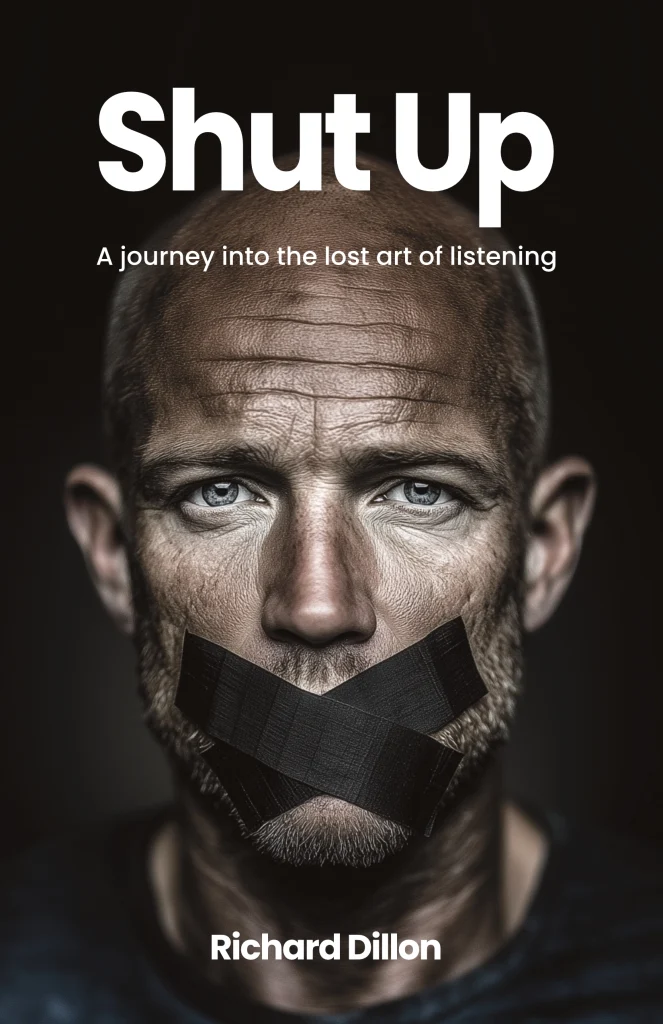
I did not decide to write a book about listening because I thought I had figured it out.
It was the opposite. I started paying attention to how often conversations felt slightly off. Not broken. Just thinner than they should have been. Like something had been skimmed instead of settled into.
I would walk away from a talk with a friend or my partner and feel oddly restless, even when everything seemed fine on the surface. No argument. No tension. Just a sense that we had spoken around something instead of through it.
For a long time I assumed this was normal. Life is busy. People are distracted. Conversations move on. But eventually I noticed how often the same thing happened when I was the one listening.
I was already halfway to my reply before the other person finished their sentence.
That realization didn’t arrive all at once. It showed up in small, uncomfortable flashes. A look on someone’s face when I jumped in too quickly. A pause that never quite recovered after I tried to help. A conversation that quietly changed direction and never came back.
One afternoon a friend was telling me about the end of a relationship. We were sitting in a cafe that smelled faintly burnt, the kind of place with uneven tables and chipped mugs. He kept circling the same few sentences, stopping and starting like he wasn’t sure what he was allowed to say out loud.
I felt the familiar pressure build. Say something useful. Say something kind. Don’t just sit there.
I almost did.
Then I noticed how tense my own body was. Jaw tight. Breath shallow. Like silence was something I needed to fix. So I didn’t speak. I stayed quiet longer than felt polite.
It wasn’t some enlightened moment. It felt awkward and slightly wrong. But after a while, his shoulders dropped. He exhaled. When he spoke again, it wasn’t polished or insightful. It was truer.
That moment stuck with me because nothing I said helped him get there.
Once I noticed that, I couldn’t stop noticing it everywhere. How often advice arrived too early. How often reassurance shut something down instead of opening it up. How quickly we move to tidy things that are still messy.
I saw it most clearly in my closest relationships, which was harder to sit with. With my partner, I genuinely believed I was being supportive when I offered perspectives or reframed problems. I wasn’t trying to control anything. I just didn’t know how to stay quiet when something felt unresolved.
But there was always a moment when I could feel her pull back slightly. Not in anger. More like a door closing softly.
With my kids, the lesson was even clearer. My eldest once sat on his bed, elbows on his knees, staring at the floor. I asked what was wrong. He shook his head. Every part of me wanted to keep asking, to guide him toward words.
Instead, I sat on the bed near him and said nothing. I don’t know why. Maybe I was tired. Maybe I was learning.
After a few minutes he stood up, said he felt better, and went to find his brother. No explanation. No emotional breakthrough. Just relief.
That was when it landed for me. He didn’t need help understanding his feelings. He needed space to have them without being managed.
That’s a hard thing for a lot of men to learn.
We are taught that presence means action. That caring looks like doing something. Silence can feel like neglect. Not knowing what to say can feel like failure.
So we fill the space. We offer solutions. We share our own stories. We explain.
Most of the time we mean well. But meaning well doesn’t always mean we’re listening.
The world doesn’t help. Everything moves fast. Everyone has an opinion. We’re rewarded for being quick, articulate, and confident. Even conversations have started to feel like performances. Say something sharp. Say something useful. Say something that proves you’re paying attention.
Real listening doesn’t work like that.
It’s slower. It’s less tidy. It often feels like you’re doing nothing at all. Which is exactly why it’s uncomfortable.
What surprised me most, as I practiced staying quiet, was how much it changed me. When I stopped reaching for words, I started noticing what was underneath the urge to speak. The need to be needed. The discomfort of not being in control. The fear that if I didn’t offer something, I wouldn’t matter.
Letting go of that didn’t make me less engaged. It made me steadier.
People didn’t open up because I said the right thing. They opened up because I stopped steering. Conversations wandered. Pauses stretched. Sometimes nothing happened at all.
And that turned out to be enough.
I wrote Shut Up because I wanted to understand this better. Not to teach it, and definitely not to package it neatly. The book isn’t a set of rules. It’s a record of noticing. Of getting it wrong. Of learning when to step back.
It’s about the kind of listening that doesn’t rush toward meaning. The kind that allows things to stay unfinished. The kind that says, without words, I’m still here.
If you’ve ever left a conversation feeling oddly empty, or sensed that someone close to you stopped sharing something important, this book is for you. Not because it has answers, but because it asks you to slow down long enough to notice what usually gets missed.
You don’t need better words. You need more room.
That’s what listening really is. Not silence as absence, but silence as space.
And learning how to stay inside it.
Get the book! Shut Up: A journey into the lost art of listening