When my eldest son turned fifteen, I took him away on his own.
Not a family trip and not a reward. Just the two of us, somewhere unfamiliar, with enough distance from daily life that conversations didn’t have to compete with routines, screens, or interruptions. I had a loose intention for the trip, something like a modern rite of passage, but I didn’t fully understand what that meant until we were in it.
We talked a lot on that trip.
Long conversations. Meandering ones. The kind that start nowhere and end somewhere unexpected. The difference wasn’t silence. The difference was how I showed up inside those conversations.
For the first time, I wasn’t listening as a father.
I wasn’t steering, correcting, reassuring, or quietly shaping his thoughts into something safer or more manageable. I wasn’t waiting for my turn to guide him toward a better conclusion. I was listening as another man, not an authority, not a teacher, but a fellow traveller.
That shift changed everything.
When you listen as a parent, even with love, there’s often an invisible agenda. You want to protect. You want to help them land on their feet. You want to soften the edges before the world gets to them. When you listen as a fellow man, that agenda falls away. You’re not there to improve the moment. You’re there to witness it.
And teenagers feel that difference immediately.
He spoke differently. Not dramatically, not constantly, but more honestly. There was less performance in what he said and more curiosity. Less certainty, more testing. He wasn’t asking me to solve anything. He was trying ideas out loud, seeing how they sounded once they were spoken.
All I had to do was stay with him.
That trip became a reference point for me, not because of where we went or what we did, but because of how I listened. It quietly reshaped how I thought about presence, authority, and trust, and it stayed with me as my youngest son grew closer to that same age.
Years later, I took my youngest on his own trip to Bali.
Different country. Different pace. A different boy entirely. Where his brother was open and outward, this one moved more carefully, noticing more than he said. I already knew by then that the lesson wouldn’t be in the itinerary. It would be in my restraint.
This time, we talked less, and that was exactly right for who he is.
But again, I listened differently. Not as someone trying to guide him toward insight, not as a parent managing the moment, but as someone walking beside him while he worked things out in his own way. I resisted the urge to narrate what the trip was meant to mean, or to rush meaning into moments that were still forming.
And once again, that was enough.
The places were different. The conversations were different. But the pattern was unmistakable. When I stepped out of the role and stayed present as myself, something honest had room to surface.
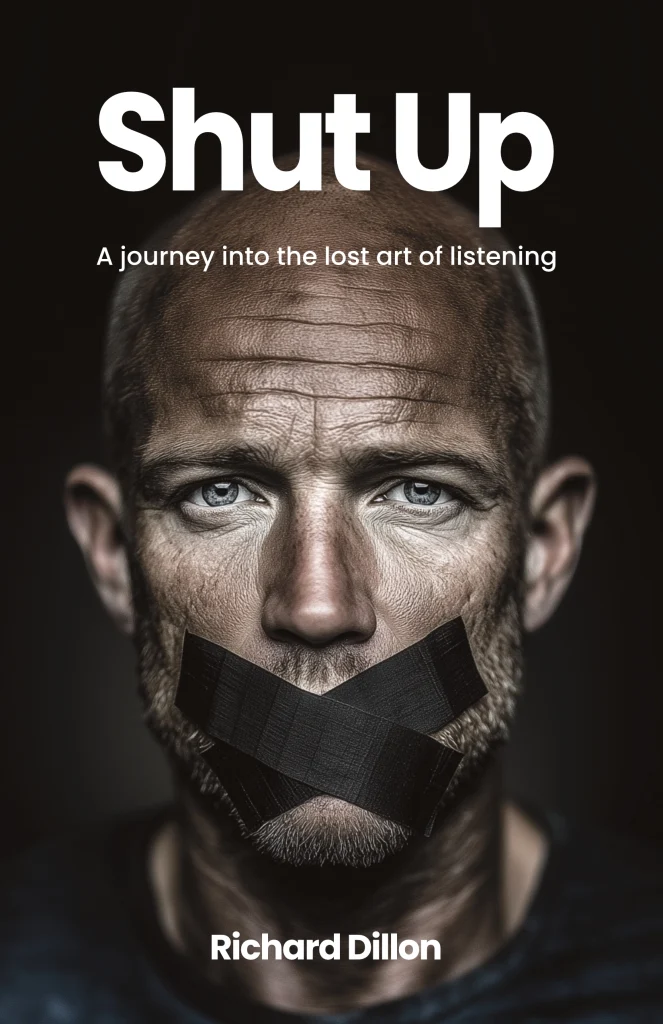
Those experiences sit quietly underneath my book Shut Up: A Journey into the Lost Art of Listening.
The book isn’t about parenting advice or communication techniques. It’s about the moments where we stop relating from role and start relating from presence. Where we listen without trying to fix, shape, or justify ourselves.
What my boys showed me, each in their own way, is that being listened to as an equal is powerful. Especially at an age where the world is already telling you who you should be and how you should become it.
Sometimes the most respectful thing a parent can do is temporarily step out of being the parent and simply stay human.
That’s the kind of listening I’m still learning.
And that’s what this book is really about.