We were drilling irimi nage, a classic entering throw, and nothing was landing. My body was tight, my timing was off. I was rushing, thinking two moves ahead, trying to execute the technique rather than feel it. Sensei came over, calm as always, and said, “Stop trying so hard. Let the uke teach you.” Then he walked away.
My first thought was: but I’m here to learn from you.
It took months, maybe years, for what he said to actually land. In Aikido, the uke is the one who attacks, the one whose energy you receive. Let the uke teach you means letting the encounter itself be the teacher. Stop forcing. Stop leading. Receive.
I eventually understood it on the mat. It took longer to see the same thing happening in conversation.
The biggest obstacle to real listening isn’t distraction, or noise, or even your phone face-up on the table. It’s ego. The part of you that quietly needs to be seen as competent, useful, insightful. The part that fears that if you don’t offer something of value, you’ll fade. That discomfort is so familiar most of us don’t recognise it as discomfort at all. It just feels like engagement. It feels like participation.
But watch what it actually produces. You’re listening, and then the other person says something you recognise, something you’ve felt or experienced or have a thought about, and the internal monologue kicks in. You start composing. You find your entry point. By the time they finish the sentence, you’re already somewhere else, waiting for the gap so you can step through it.
That is not listening. That is performing listening while actually preparing to speak.
I did this in the dojo every time I tried to demonstrate ability instead of meet the moment. I’d anticipate the attack rather than receive it. And it never worked. The more I tried to show what I knew, the worse the technique became. Sensei could see it from across the room. So could my training partners. The grip was too tight. The movement too effortful. All that trying made me slower, not sharper.
The same thing happens in conversation. We rush to fill silence because it stirs something we’re not ready to feel. We offer advice not because someone asked for it, but because having nothing to offer feels uncomfortably close to being nothing. That’s the part we don’t usually say out loud.
What I had to learn, slowly and with a lot of resistance, is that the most powerful thing you can do in a conversation is release the need to prove anything. Not perform generosity. Actually release it. Let the other person’s words arrive before you decide what they mean or what they require from you.
Sensei was right. The encounter itself is the teacher. You just have to get out of its way.
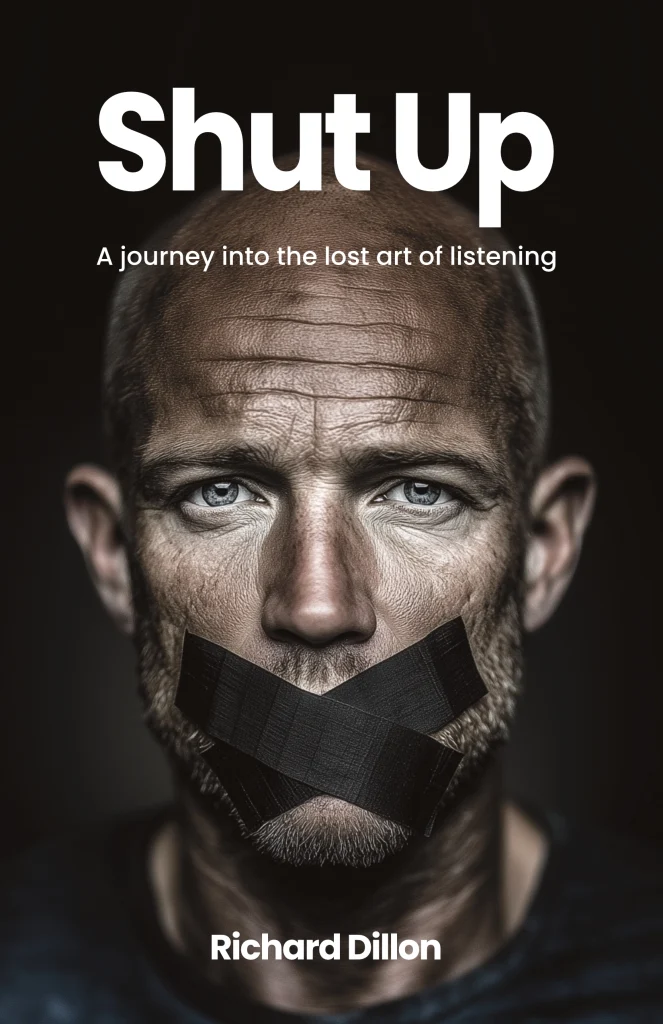
My book Shut Up: A Journey into the Lost Art of Listening is available on Amazon if you want to go further with this.